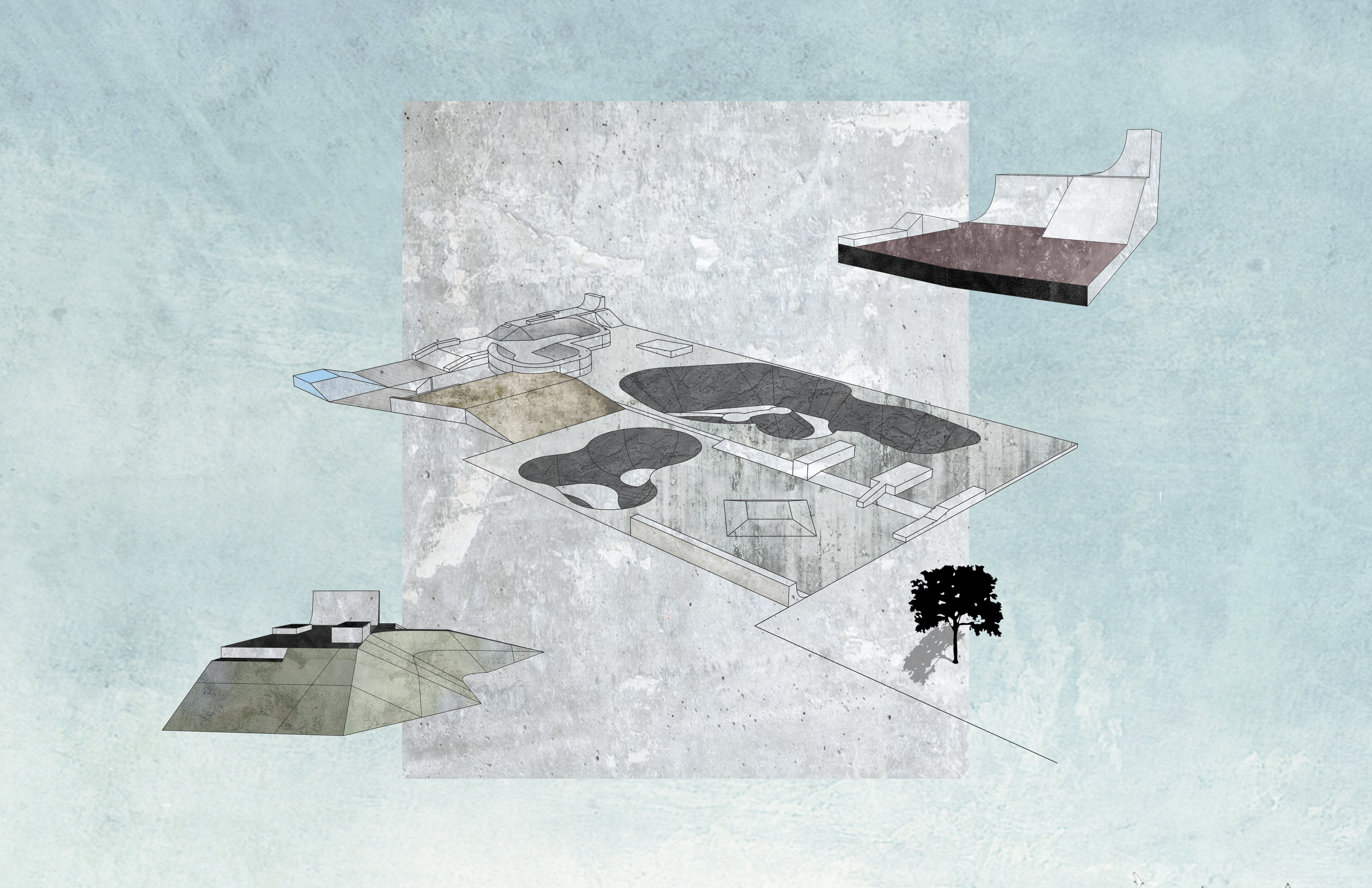
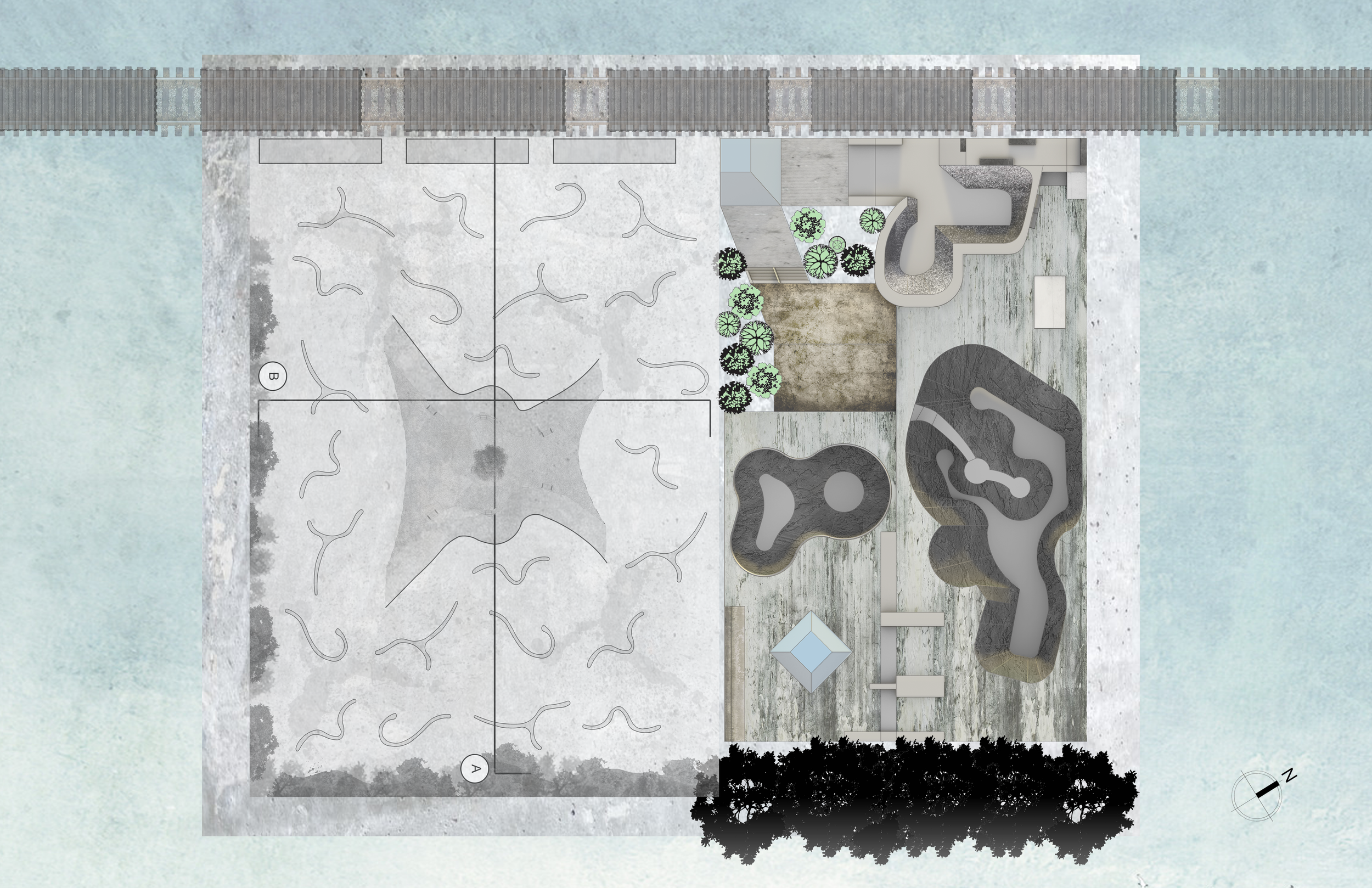
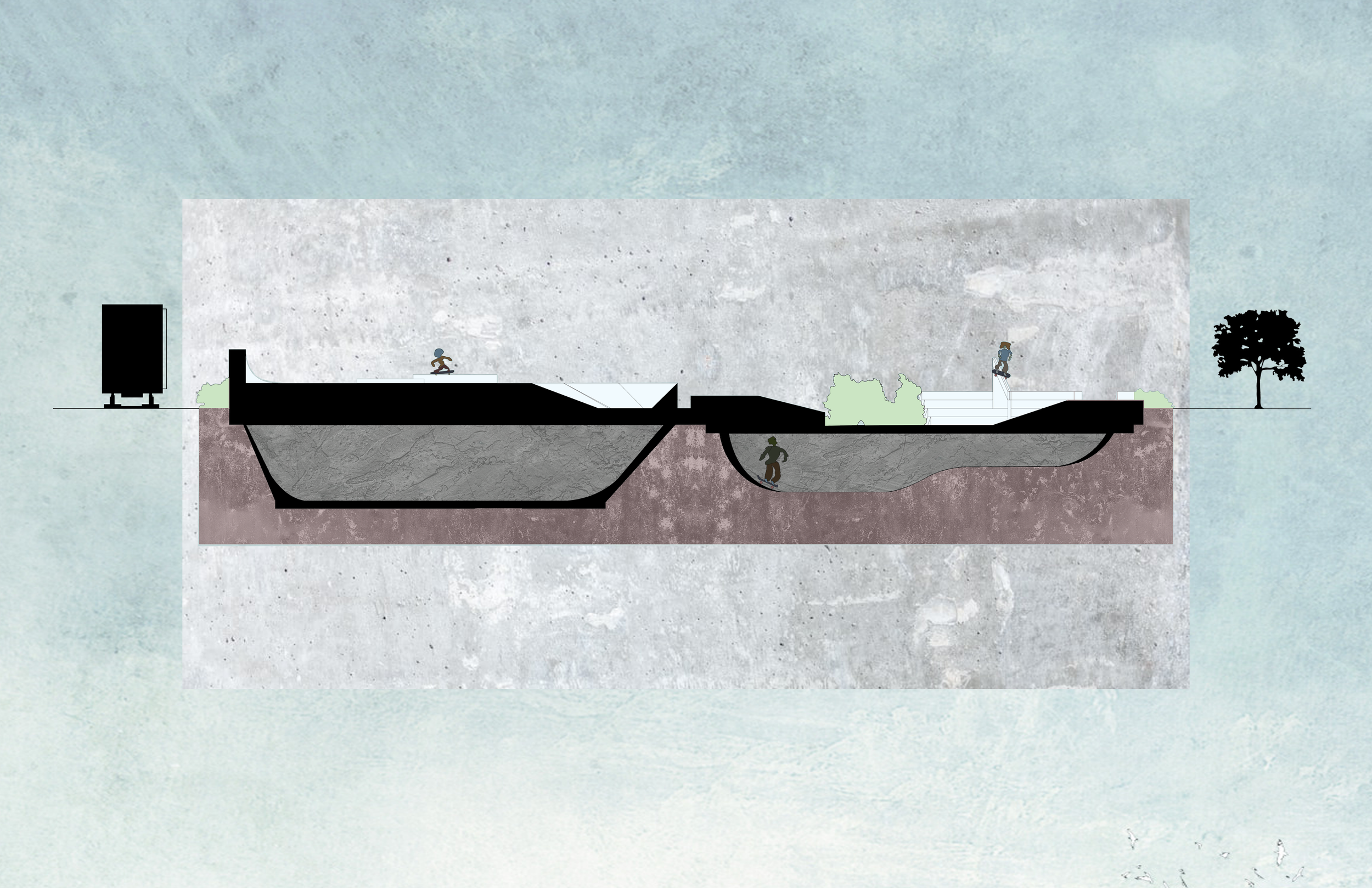
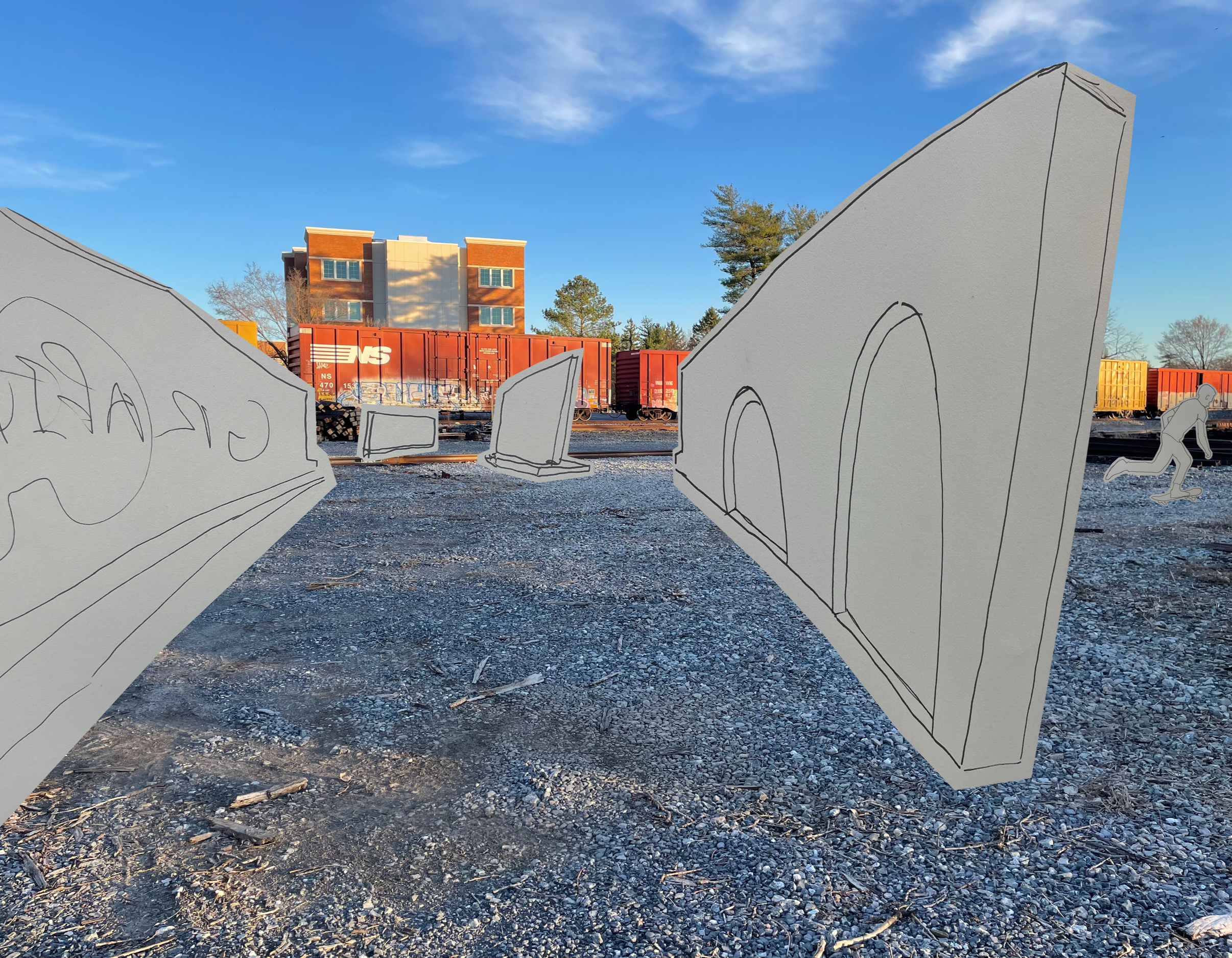
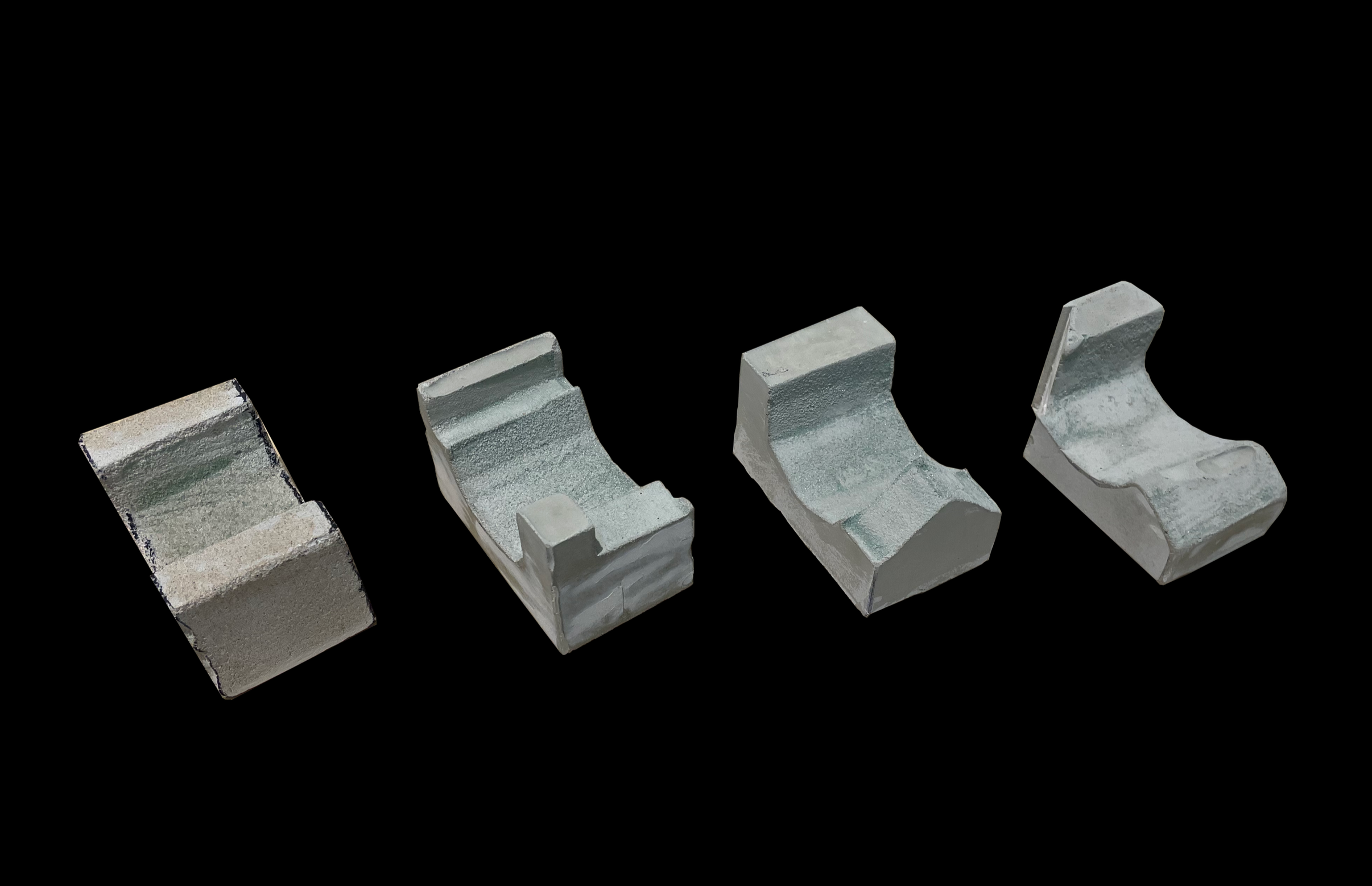
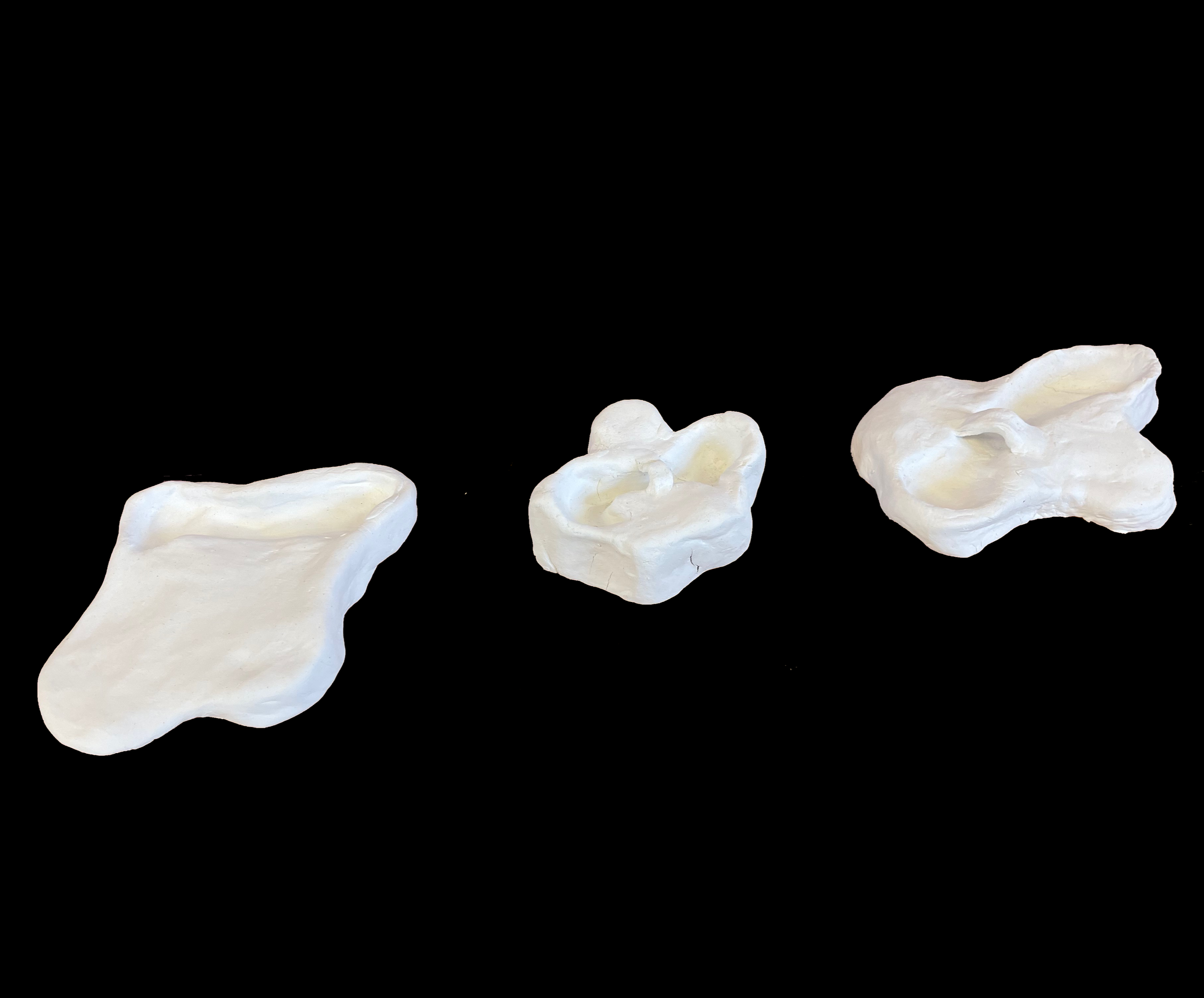
This early undergraduate project was developed as part of an urban architecture design studio focused on Harrisonburg, Virginia’s Blacks Run Creek corridor. While many proposals explored interventions such as sculpture parks and passive recreation spaces, I pursued a direction more closely aligned with my own background and interests, designing a skatepark as an active community anchor.

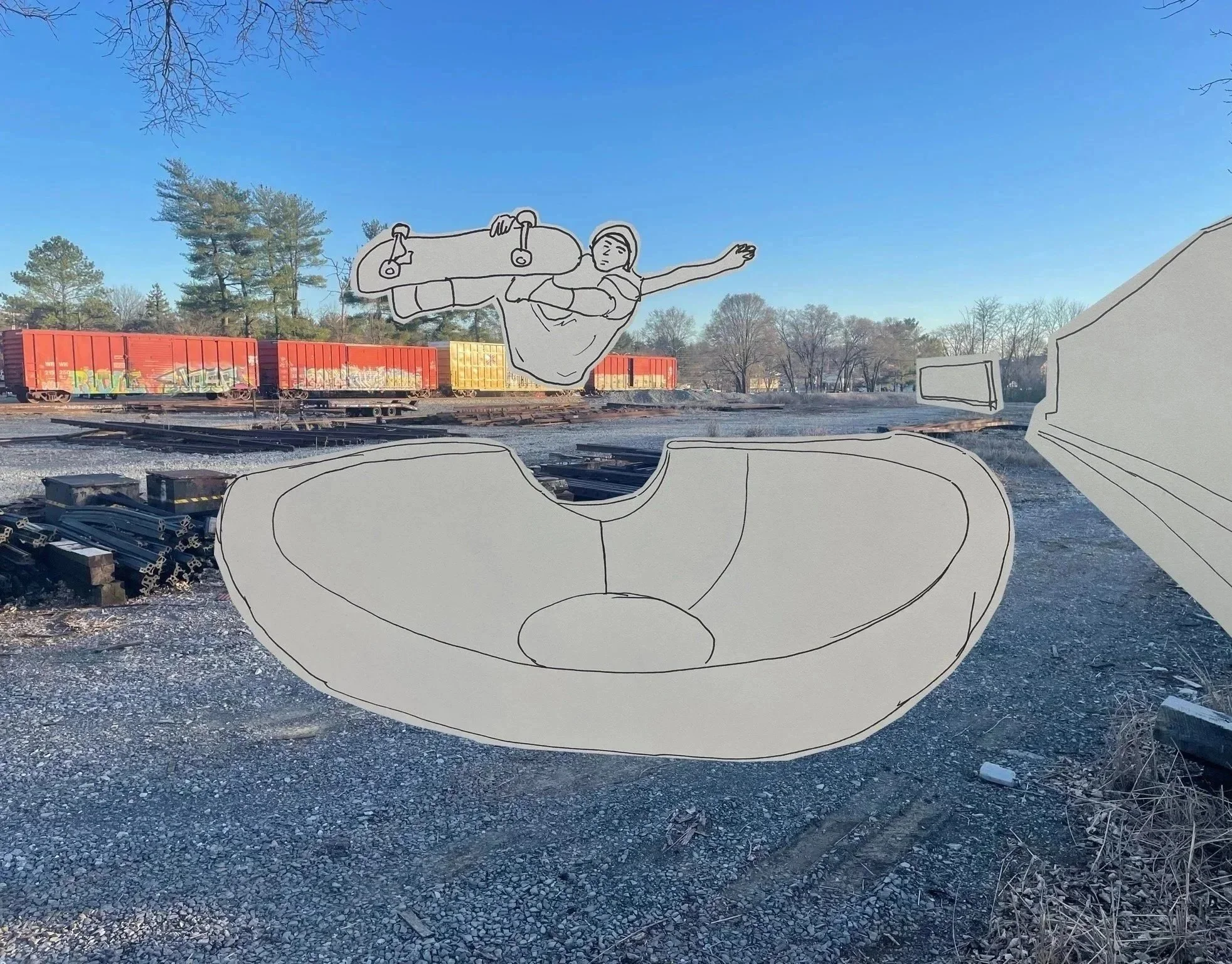
The proposed skatepark occupies a former railroad storage site that had been used for surplus materials. The selection of this location was intentional: the land was already level, local skaters had informally established a DIY skate area on the site, and it sits adjacent to a proposed sculpture park that connects to a creek crossing, creating a cohesive sequence of student-designed interventions along the corridor.

The project embraces an industrial material language that responds to the neighboring railroad infrastructure while complementing the adjacent contemporary sculpture park. Its proximity to downtown Harrisonburg and James Madison University makes it highly accessible to students and residents alike, positioning the skatepark as both a recreational facility and a social gathering space.

Notably, this was my first time designing a skatepark and my first fully realized project modeled in Rhino 6. The design also allowed me to explore original obstacle concepts, features inspired by elements I have always wanted to skate myself. At the time of the project, Harrisonburg’s only public skatepark had been demolished the previous semester, making this proposal not only a design exercise but also a response to a tangible community need.